Industry Business & Technical Analysis
Industry Business Analysis
Eleven World-Leading Companies
A mix of companies with product and service-based offers was sought and agreed to take part in a Design Council study.
The full study includes eleven case studies looking in detail at the processes used at each participating company.
These can be accessed using the independently compiled *.pdf report .
- Alessi
- BSkyB
- BT
- LEGO
- Microsoft
- SONY
- Starbucks
- Virgin Atlantic Airways
- Whirlpool
- Xerox
- Yahoo
In 2007, the Design Council (https://www.designcouncil.org.uk/) was asked to conduct a study of the design processes used in leading global companies. The remit of the study was to understand the design processes used by leading corporate users of design, what elements they involve, and how these processes take a product or service.
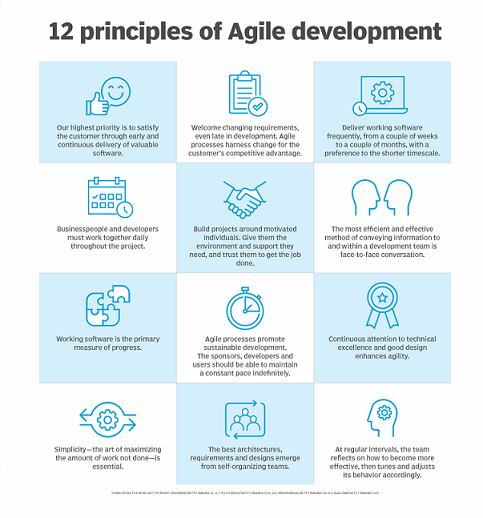
Twelve Agile Principles
The IT Project Lifecycle
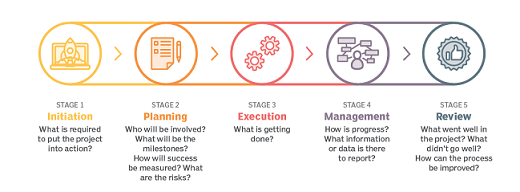
DSDM Methodolgy
Dynamic Systems Development Method - a tailored⁄hybrid process methdology :- There are eight principles underpinning DSDM. These principles direct the team in the attitude they must take and the mindset they must adopt to deliver consistently.
- focus on the business need
- deliver on time
- collaborate
- Never compromise quality
- build incrementally from firm foundations
- develop iteratively
- communicate continuously and clearly
- demonstrate control
DSDM can be considered as part of a broad range of iterative and incremental development frameworks, especially those supporting agile and object-oriented methods. These include (but are not limited to) scrum, extreme programming (XP), disciplined agile delivery (DAD), and rational unified process (RUP).
Like DSDM, these share the following characteristics:
- They all prioritise requirements and work though them iteratively, building a system or product in increments.
- They are tool-independent frameworks. This allows users to fill in the specific steps of the process with their own techniques[5] and software aids of choice.
- The variables in the development are not time/resources, but the requirements. This approach ensures the main goals of DSDM, namely to stay within the deadline and the budget.
- A strong focus on communication between and the involvement of all the stakeholders in the system. Although this is addressed in other methods, DSDM strongly believes in commitment to the project to ensure a successful outcome.
MoSCoW: is a technique for prioritising work items or requirements. It is an acronym that stands for: (Must have, Should have, Could have, Won’t have)
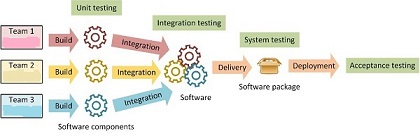
Testing Team Formation
Development Test team formation project lifecycle stages for in-house system acceptance phases.
Industry Technical Analysis
Industry software insights and history timelines..
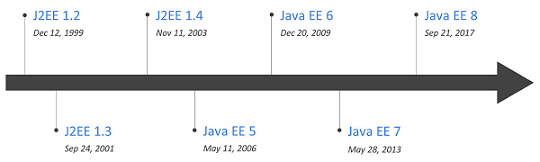
i) Java Enterprise Edition (JEE) Timeline - (Jakarta EE, Java EE or J2EE)
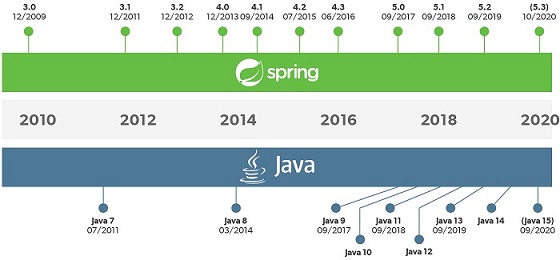
ii) Spring Framework Timeline
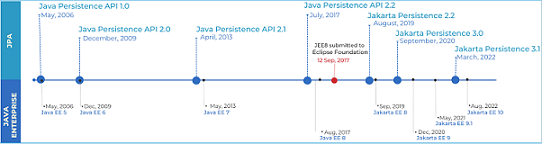
iii) Java Persistence Timeline
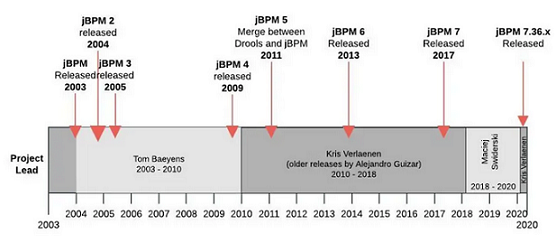
iv) Java Business Process Model (jBPM) Timeline
home page | company unit | IT industry | IT design | IT services | IT project | references | contact me
© 2002⁄3-2026 JavaMagic | privacy policy | cookie policy | disclaimer | sitemap
mobile: unassigned email: webmaster@javamagic.co.uk
